Have your say on wood burning
The government are consulting on measures to reduce air pollution from domestic burning, and we need your help before 19 March 2026.
Burning wood in a stove or fireplace at home is one of the biggest sources of fine particle air pollution (PM2.5) in the UK.
This type of pollution is the most dangerous for our health, as it enters the bloodstream when inhaled and causes heart and lung disease, stroke, cancer, diabetes, and dementia.
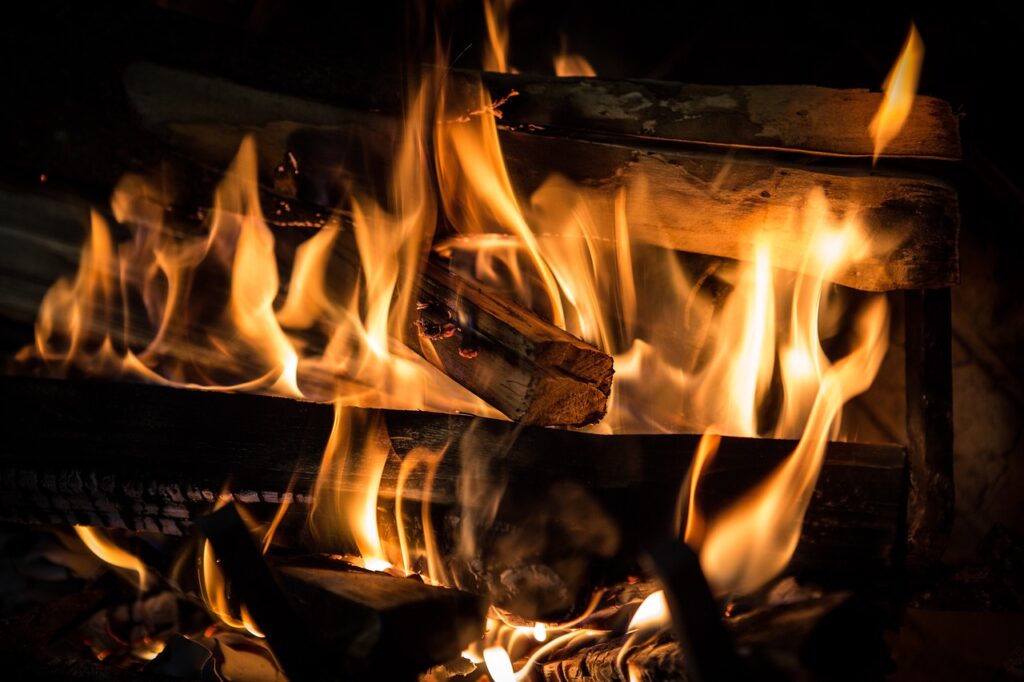
Research reveals that even homes using newer “Ecodesign” wood burners are three times more polluted than those without, as stoves and open fires create air pollution both inside the home and outside, affecting your neighbours.
- Are you concerned about the impacts of wood burning on your health?
Do you want to see action from the UK Government to clean up our air?
Right now, the UK Government is consulting on solid fuel burning in the home, and they need your thoughts and experiences to shape action so we can all breathe clean air. Keep reading to find out more about the consultation and how you can get involved.
What is the consultation?
The Department for Environment, Food and Rural Affairs has launched a consultation on domestic burning and is seeking public and stakeholder views on their ideas. The consultation runs for eight weeks and closes on 19 March 2026. If you are concerned about pollution from wood burning, have been affected by pollution from wood burning, or care about tackling air pollution more generally, you should respond to this consultation.
Why is wood burning a problem?
Burning wood and other fuels in a stove or fireplace at home is one of the biggest sources of fine particle air pollution (PM2.5) in the UK. This type of pollution is the most dangerous for our health, as it enters the bloodstream when inhaled and causes heart and lung disease, stroke, cancer, diabetes, and dementia. Burning at home increases air pollution inside the home, but also negatively affects neighbours and air quality in the local area, in addition to contributing to overall air pollution levels.
Some people say that burning wood is a cheaper way to heat your home. But recent research shows that not only is wood burning almost always a more expensive way to heat a home, there are also significant hidden societal costs to burning wood.
There’s also a perception that burning wood is more sustainable than other forms of heating. However, to generate the same amount of heat, burning wood produces more global-warming carbon dioxide (CO2) than burning oil or gas. Plus, when we cut down trees, those trees stop absorbing CO2 from our atmosphere. And it takes a long time for those trees to grow back.
How can I respond to the consultation?
Whether you only have a few minutes to respond, or more time to spare, your perspective is valuable, and it’s important that the government receive lots of feedback on their ideas. This is your chance to shape the rules that affect our health, local communities and the environment.
You can respond to the consultation via a survey on the Department for Environment, Food and Rural Affairs’ website.
Our simple guidance for responding to the consultation makes it easy to have your say.
Click to expand the option below that is most relevant to you.
If you have ten minutes
If you don’t have much time, a short, personal response still makes a difference. Every response counts, and you will be highlighting health and environmental concerns that might otherwise be underrepresented in the consultation.
Questions 1 – 8 cover who you are and what part of the UK you live in.
You can request that your response be anonymous, if you explain why you would prefer this.
Questions 9 – 52 ask for views on a range of policy changes.
If you have ten minutes to respond to the consultation, we recommend questions to prioritise, and a guide to what to say, below.
It is important that you write your response in your own words and do not copy and paste this guidance directly into the open text boxes. Any answers that look identical may be excluded from the results, and we want to make sure your views are heard in the consultation.
- 9. Do you feel the proposed new emissions limit of 1g per hour (plus 0.1g per 0.3 kW of output) for stoves is appropriate?
NO - 10. If no, please explain what you feel the emissions limit should be and why.
Please give your own view, but we suggest writing that the proposed new emissions limit should be lower. We believe it is unambitious because almost all stoves on the market already meet this limit. - 11. Do you have any comments on the impact (positive or negative) resulting from the proposed new standard? This could be in terms of air quality, human health, the economy or the stove industry, for example.
We suggest including in your answer the positive benefits for air quality and human health of reducing emissions from wood burning stoves. Evidence shows that exposure to smoke from burning wood and other solid fuels harms our health. In your own words, you could include information from these sources:
• Global Action Plan’s Clean Air Hub
• Ricardo/Global Action Plan analysis of health impacts from domestic burning (2025)
• Mums for Lungs wood burning campaign
We also suggest including in your answer the wider positive impact on the NHS and the economy of reducing emissions from wood burning stoves. Evidence also shows that the health harms of exposure to smoke from burning wood and other solid fuels have a negative impact on the NHS and the economy. In your own words, you could include information from these sources:
• Ending all unnecessary domestic burning could save £54 million in healthcare costs and £164 million in wider productivity costs to the UK economy every year. (Ricardo/Global Action Plan, 2025)
• In 2019, NHS costs, productivity losses and reduced quality of life due to air pollution cost more than £27 billion. (Royal College of Physicians, 2025)
- 23. To what extent do you agree or disagree that health labelling should be mandatory on solid fuel appliances?
STRONGLY AGREE - 24. Please provide any evidence you have to support your response
Evidence shows that exposure to smoke from burning wood and other solid fuels harms our health. In your own words, you could include information from these sources:
• Global Action Plan’s Clean Air Hub
• Ricardo/Global Action Plan analysis of health impacts from domestic burning (2025)
• Mums for Lungs wood burning campaign
Evidence shows that people are not aware of the health harms of burning wood and other solid fuels. In your own words, you could include information from these sources:
• Kantar research on wood burning and air pollution (2022)
• Clean Air Public Insights Tracker: December 2025
• London Wood Burning Project survey (2023) – London only - 27. To what extent do you agree or disagree that the health statement “Please be aware that this appliance emits air pollution which can harm your health” is appropriate
DISAGREE
We think this statement is vague and lacks immediacy.
We encourage you to give your own personal opinion on the example label displayed.
- 41. To what extent do you agree or disagree that health labelling should be mandatory on solid fuel packaging?
STRONGLY AGREE - 42. Please provide any evidence you have to support your response.
Evidence shows that exposure to smoke from burning wood and other solid fuels harms our health. Answering in your own words, you could include information from these sources:
• Global Action Plan’s Clean Air Hub
• Mums for Lungs wood burning campaign
• Global Action Plan’s wood burning FAQs
Evidence shows that people are not aware of the health harms of burning wood and other solid fuels. Answering in your own words, you could include information from these sources:
• Kantar research on wood burning and air pollution (2022)
• Clean Air Public Insights Tracker: December 2025
• London Wood Burning Project survey (2023) – London only - 43. Are there any additional elements or considerations which you think should be included in the labelling specification or design?
YES - 44. Please provide details of the other elements or considerations you think should be included in the labelling specification or design
In your own words, you might want to mention:
• Health labels should be of adequate size and positioned centrally on the packaging.
• Existing stove a fuel labels often include terms like ‘Defra approved’ and ‘Ecodesign’. These are misleading as they make a product sound safe and might lead to confusion alongside the health warnings. - 45. Which of the following health statements do you prefer?
Option C: Burning solid fuels to heat your home can lead to debilitating health conditions, including cardiovascular disease and asthma, which can result in premature death
If you have longer to spare
If you can spare 20-25 minutes, a fuller response allows you to expand on your concerns and comment directly on each specific proposal in the consultation.
Questions 1 – 8 cover who you are and what part of the UK you live in.
You can request that your response be anonymous, if you explain why you would prefer this.
Questions 9 – 52 ask for views on a range of policy changes.
If you have longer to spend on the consultation, you can read our guidance on each question below and respond to the questions most relevant to you.
It is important that you write your response in your words and do not copy and paste this guidance directly into the open text boxes. Any answers that look identical may be excluded from the results, and you want to make sure your views are heard in the consultation.
- 9. Do you feel the proposed new emissions limit of 1g per hour (plus 0.1g per 0.3 kW of output) for stoves is appropriate?– This limit refers to the amount of smoke and air pollution a stove produces when it is being used.
NO - 10. If no, please explain what you feel the emissions limit should be and why.
Please give your own view, but we suggest writing that the proposed new emissions limit should be lower. We believe it is unambitious because almost all stoves on the market already meet this limit. - 11. Do you have any comments on the impact (positive or negative) resulting from the proposed new standard? This could be in terms of air quality, human health, the economy or the stove industry, for example.
We suggest including in your answer the positive benefits for air quality and human health of reducing emissions from wood burning stoves. Evidence shows that exposure to smoke from burning wood and other solid fuels harms our health. In your own words, you could include information from these sources:
• Global Action Plan’s Clean Air Hub
• Ricardo/Global Action Plan analysis of health impacts from domestic burning (2025)
• Mums for Lungs wood burning campaign
We also suggest including in your answer the wider positive impact on the NHS and the economy of reducing emissions from wood burning stoves. Evidence also shows that the health harms of exposure to smoke from burning wood and other solid fuels have a negative impact on the NHS and the economy. In your own words, you could include information from these sources:
• Ending all unnecessary domestic burning could save £54 million in healthcare costs and £164 million in wider productivity costs to the UK economy every year. (Ricardo/Global Action Plan, 2025)
• In 2019, NHS costs, productivity losses and reduced quality of life due to air pollution cost more than £27 billion. (Royal College of Physicians, 2025) - 12. To what extent do you agree or disagree that a 3 – 5 year timescale for the new limits coming into force following new legislation is appropriate?
STRONGLY DISAGREE - 13. If you disagree, please explain why and give your views on an alternative timeframe
We suggest writing, in your own words, that the timeframe should be shorter because air pollution from domestic burning is an urgent health issue and sales of wood burning stoves are increasing every year. - 14. Do you have a view on which standard or regime could be used for a single testing regime for appliance emissions?
We believe any testing regime must be independent and use real-world conditions and real-world stove users. In your own words, your answer could include:
• Support for a single testing regime conducted by an independent body, not by industry.
• Support for testing stoves in real-world conditions.
• Support for stoves to be tested with real stove users, not specialists.
• Support for stoves to be tested with all fuels that could be burnt in them. - 15. To what extent do you agree or disagree that solid fuel appliances should be subject to periodic retesting after being on the market, to ensure continued compliance with air quality and efficiency standards?
STRONGLY AGREE - 16. How often do you think retesting should be carried out?
EVERY 2 YEARS - 17. To what extent do you agree or disagree with the introduction of a mandatory labelling scheme for solid fuel appliances?
STRONGLY AGREE - 19. To what extent do you agree or disagree that the example label above effectively communicates information about the air pollution emissions of a solid fuel appliance?
We encourage you to give your personal views on the example label displayed. - 21. To what extent do you agree or disagree that the example label above effectively informs consumers about the fuels permitted for use in a given solid fuel appliance?
We encourage you to give your personal views on the example label displayed. - 23. To what extent do you agree or disagree that health labelling should be mandatory on solid fuel appliances?
STRONGLY AGREE - 24. Please provide any evidence you have to support your response.
Evidence shows that exposure to smoke from burning wood and other solid fuels harms our health. In your own words, you could include information from these sources:
• Global Action Plan’s Clean Air Hub
• Ricardo/Global Action Plan analysis of health impacts from domestic burning (2025)
• Mums for Lungs wood burning campaign
Evidence also shows that people are not aware of the health harms of burning wood and other solid fuels. In your own words, you could include information from these sources:
• Kantar research on wood burning and air pollution (2022)
• Clean Air Public Insights Tracker: December 2025
• London Wood Burning Project survey (2023) – London only - 25. To what extent do you agree or disagree that the example label above effectively conveys that there are health impacts of using solid fuels appliances to consumers?
We encourage you to give your personal opinion on the example label displayed. - 27. To what extent do you agree or disagree that the health statement “Please be aware that this appliance emits air pollution which can harm your health” is appropriate?
DISAGREE
We think this statement is vague and lacks immediacy.
We encourage you to give your own personal opinion on the example label displayed. - 29. Are there any additional elements or considerations which you think should be included in the labelling specification or design?
YES - 30. If yes, what considerations you think should be included in the labelling specification or design?
In your own words, you might want to mention:
• Health labels should be of adequate size and positioned centrally on the packaging.
• Existing stove a fuel labels often include terms like ‘Defra approved’ and ‘Ecodesign’. These are misleading as they make a product sound safe and might lead to confusion alongside the health warnings. - 31. Do you agree or disagree that Trading Standards should be the enforcing body for the proposed labelling requirements?
AGREE
- 33. To what extent do you agree or disagree that a range of penalties between £300-£2000 should be used for breaches of the proposed new labelling requirements?
STRONGLY AGREE - 35. To what extent do you agree or disagree that an increased penalty within the proposed range of £300-£2000 for repeat offenders should be introduced to deter continued non-compliance?
STRONGLY AGREE - 37. To what extent do you agree or disagree that the enforcing body should be able to enter a premises at a reasonable time, inspect goods and require persons to provide information?
STRONGLY AGREE - 39. To what extent do you agree or disagree that the enforcement authority should be allowed to charge persons the costs incurred in performing their functions?
STRONGLY AGREE - 41. To what extent do you agree or disagree that health labelling should be mandatory on solid fuel packaging?
STRONGLY AGREE - 42. Please provide any evidence you have to support your response.
Evidence shows that exposure to smoke from burning wood and other solid fuels harms our health. Answering in your own words, you could include information from these sources:
• Global Action Plan’s Clean Air Hub
• Mums for Lungs wood burning campaign
Evidence shows that people are not aware of the health harms of burning wood and other solid fuels. In your own words, you could include information from these sources:
• Kantar research on wood burning and air pollution (2022)
• Clean Air Public Insights Tracker: December 2025
• London Wood Burning Project survey (2023) – London only - 43. Are there any additional elements or considerations which you think should be included in the labelling specification or design?
YES - 44. Please provide details of the other elements or considerations you think should be included in the labelling specification or design
In your own words, you might want to mention:
• Health labels should be of adequate size and positioned centrally on the packaging.
• The terms ‘Defra approved’ and ‘Ecodesign’ are misleading as they make the product sound safe and could lead to confusion alongside a health warning. - 45. Which of the following health statements do you prefer, and why?
Option C: Burning solid fuels to heat your home can lead to debilitating health conditions, including cardiovascular disease and asthma, which can result in premature death - 46. Please give a reason for your choice.
We think Option C is most specific about the health harms of air pollution. If you also prefer Option C, please explain your preference in your own words. - 48. To what extent do you agree that increasing the fixed penalty notice for suppliers under the Domestic Solid Fuels Regulations would deter non-compliance?
AGREE - 49. What do you think the cost of a fixed penalty notice should be for suppliers breaching the Domestic Solid Fuels Regulations?
£2000 - 50. To what extent do you agree that an increased penalty for repeat offenders should be introduced to deter continued non-compliance?
STRONGLY AGREE - 51. Please provide further detail to support your response.
We suggest writing that an increased penalty for repeat offenders is fair.
In your own words, you could say this is because without increased penalties, sellers found non-compliant may continue to risk not updating product labelling. Penalising repeat offenders is essential because air pollution from domestic burning is an urgent health issue. - 52. Do you have any additional evidence, data, or relevant information that should be considered by Defra to inform the development of these policies?
Please take this opportunity to add anything else about domestic burning that you have not had a chance to include in your response.
You might want to include:
• Are you worried about the impact of wood burning in your area on your health, your children’s health or another family member? Adding a personal story here would be relevant and powerful.
• Do you work in a profession that gives you an insight or expertise about the impact of domestic burning? E.g. You are a health professional.
• Are you concerned about the contribution that domestic burning makes to overall air pollution levels?
• Are you concerned about the impact of wood burning or other domestic burning on the environment or climate change?